
History of the Heysen Trail
Discover the history behind the Heysen Trail – one of Australia’s first and longest hiking trails – including its origin, how it came to be built, and why it’s named in honour of Sir Hans Heysen.
The beginning of the Heysen Trail
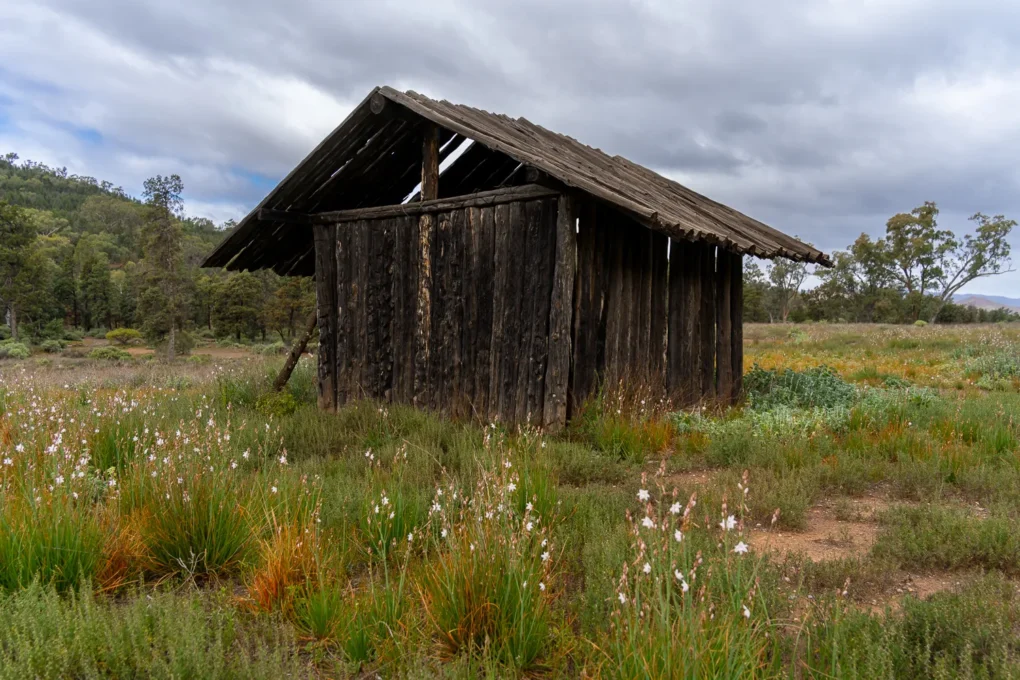
The origin of the Heysen Trail dates back to 1947 when conservationists and bushwalkers first began advocating for the development of long-distance walking trails in South Australia. By the 1960s a network of trails was being established in the Adelaide Hills and inspired by these, as well as by trails in England and the United States, Mr C Warren Bonython addressed a meeting convened by the National Trust in 1969, proposing the development of a long-distance walking trail from Cape Jervis to the Northern Flinders Ranges.
Initially it was intended that the Trail would follow the spine of the Flinders Ranges from the mid-north town of Crystal Brook in the south to Mount Babbage in the north. The Trail was eventually constructed from Cape Jervis on the Fleurieu Peninsula, following the Flinders Ranges north from Crystal Brook to Parachilna Gorge in the central Flinders Ranges.
Getting the Trail started was not without obstacles. Warren Bonython wrote of resistance from some of the councillors through whose local government areas the Trail would pass. Then in 1974, the South Australian Crown Law Department questioned the power of the State Planning Authority (SPA) to provide funds for the Trail, and later staff shortages meant the SPA progressively withdrew staff who had been seconded for the development of the Trail.
Building the Trail
Despite these obstacles the first section of the Trail, nine kilometres within the Cleland Conservation Park, was opened in 1976. In 1978, Terry Lavender, a dedicated bushwalker and planner, was appointed by the South Australian Government to continue the planning and creation of the Trail. His role was critical and over the next few years he and his team mapped a route, negotiated land access and coordinated the complex network of stakeholders.
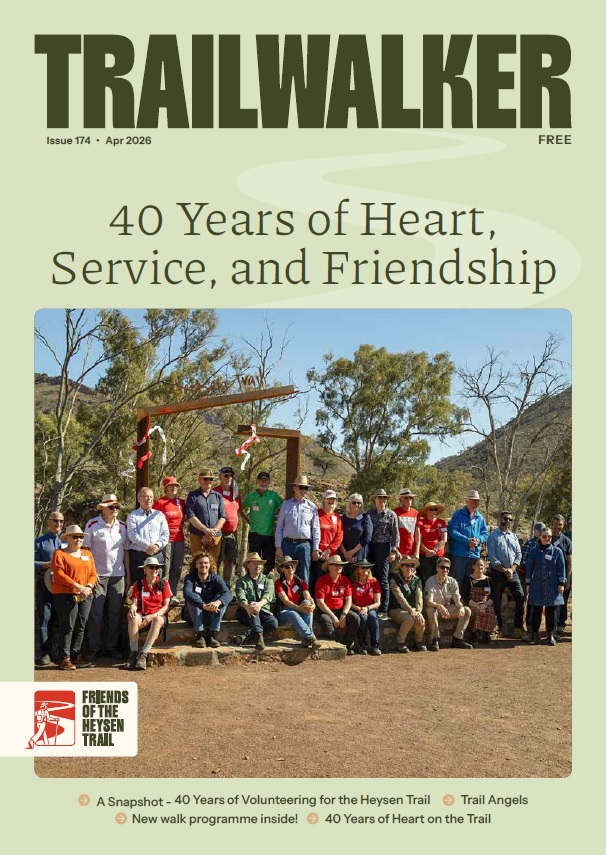
As a result of Terry Lavender’s tenacity, a 50 km section was opened in 1978 between Mount Lofty and Mount Magnificent. The Friends of the Heysen Trail was formed in 1986 as various bushwalking clubs came together to assist with the development of the Trail. Over the next 15 years, further sections were progressively opened until the completion of the Trail at Parachilna Gorge near Blinman in 1993. The project required negotiations with private landowners to allow public access through farms, vineyards and grazing land. Construction was a huge effort, involving the South Australian Government, volunteers, local councils and walking clubs.
Efforts by the Friends continue to be crucial in maintaining the Trail, promoting safety and liaising with landowners, the South Australian Government and other stakeholders.
Why is it called the Heysen Trail?
The Trail is named after German-born Sir Hans Heysen (1877-1968), an Australian artist recognised for his watercolours of the Australian bush and his strong associations with both the Mount Lofty and Flinders Ranges. While not a formal hiker, Heysen was known to be an energetic walker in pursuit of his work. His home, The Cedars, is located on the Trail near Hahndorf in the Adelaide Hills.
Further reading
To discover more about the history of the Heysen Trail, try these resources:
- C Warren Bonython AO – Obituary (The Advertiser, 26 May 2012)
- Terry Lavender – Obituary (The Advertiser, 24 January 2004)
Heysen Highlights – Companion Guide to the Heysen Trail (Simon Cameron, Openbook Howden 2018). Available from the Friends of the Heysen Trail.