Prepare to walk the Trail
Exploring the Trail independently? Proper planning is key to a successful and safe experience. Stay on this page to navigate to helpful information and guides including maps, what to wear and bring, accessing water, Trail distances, and transport.
Staying safe on the Heysen Trail
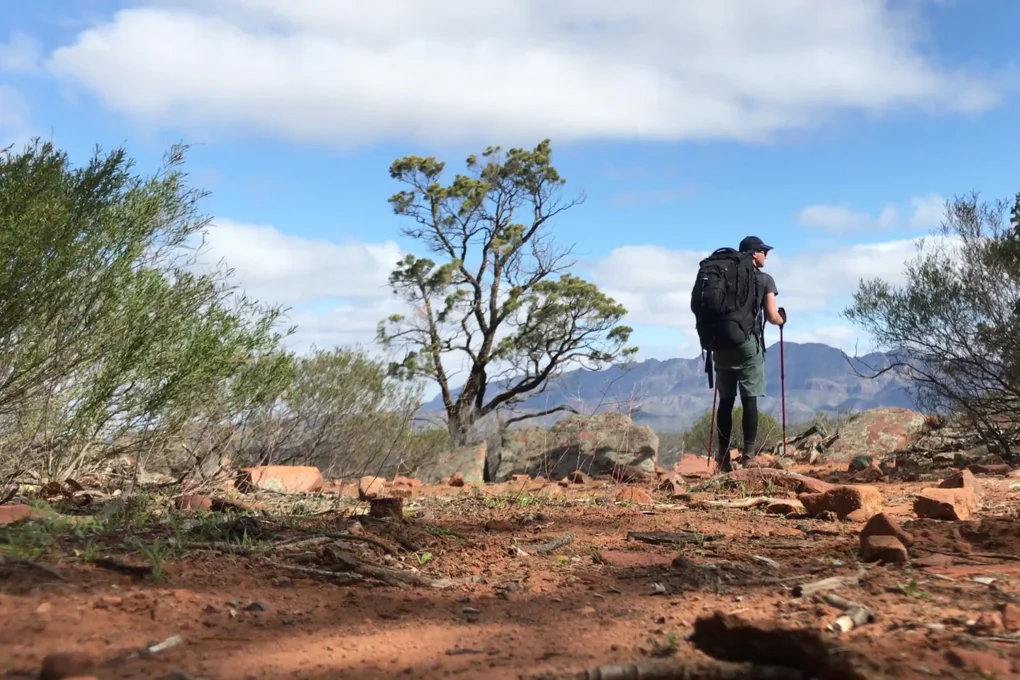
Parts of the Trail are quite difficult and remote. Mobile phone coverage, access to water and shelter, can be limited. Before you plan your walk:
- Consider the fitness and abilities of all members of your group.
- Consider the distance, how much climbing is involved and the abilities of your entire walking party. As a general rule we recommend allowing three kilometres per hour on flat ground and an additional one hour for every three hundred metres in altitude you need to climb. Don’t forget to factor in extra time for rest and meal breaks.
- Make sure you have up-to-date information and maps for your hike. Test your equipment before you leave, dress appropriately, and remember the weather can change quickly.
- Tell someone where you’re going and when you expect to return. If you’re going on a long walk, write down your route and leave it with someone you trust.
What to do if you get lost
If you get lost, try to retrace your route until you find a marker or recognise a feature. If you can hear the sounds of other people, shout to attract attention. Be on the lookout for well-travelled roads or occupied buildings.
In the event of an accident or if someone becomes too ill to continue, provide appropriate first aid and shelter. If the sick or injured person can’t be moved, seek assistance. Determine whether the person can be helped by the group, or if extra help is needed. Make contact with Emergency Services by phoning 000 or 13 1444. Consider walking with at least two other people so that if someone is injured they will not be left alone if you have to seek help.
If contact can’t be made and rescue is needed, a competent person with first aid skills should stay with the injured or ill person to reassure and care for them until help can arrive.
If you have to wait to be rescued, look for shelter and water on the Trail. In hot weather, stay in the shade, drink water and reduce loss of body fluids by moving only during the cooler part of the day. In cold weather, keep out of the wind and try to remain warm and dry. If possible, light a fire or huddle with others.
Biosecurity on the Heysen Trail
The Heysen Trail passes through agricultural properties, national parks and other sensitive landscapes. You may unintentionally transport diseases, pests and weeds on your boots, clothing or other hiking equipment.
Pests, animals and weeds have a negative impact on Australia’s ecosystems and our valuable agricultural industries. Pest animals and plants can harbour diseases that may cause environmental and economic damage.
To protect our environment and make sure you’re not transferring weed seeds and unwanted biological material, make sure you check and clean your clothes and equipment for plant or soil debris before entering walking tracks.
Important information about Phytophthora
Phytophthora is an introduced root-rot disease which is killing native plants, including gums, banksias and yaccas – all of which provide important habitat and food for native wildlife.
There is no cure for Phytophthora, nor is there any way of stopping its spread once it has infested an area. We can slow down its movement and minimise its introduction into new areas by modifying the way we behave in Phytophthora infested or Phytophthora prone areas.
Phytophthora has the ability to live in most of the southern areas of South Australia, including the Mt Lofty Ranges around Adelaide and the Fleurieu Peninsula.
You can spread Phytophthora by allowing moist soil and plant material to stick to your footwear. Please use the footwear cleaning stations along the Heysen Trail.
Read more information in the Department for Environment & Water (DEW)’s Phytophthora Information Brochure.
If you’re walking in affected areas (generally south of the Barossa Valley) you should carry a personal cleaning kit including hard brushes and a disinfectant (methylated spirits, or 20% household bleach with 80% water in a spray bottle).